

The first time I lowered myself onto a chair in the shower, I felt about ninety years old and silly about it. I am 71, a retired machinist, and I live in a one-story brick ranch outside Huntsville, Alabama. I spent forty years standing on concrete, so standing in a shower never struck me as a thing that needed fixing.
Then a knee buckled in my garage on a Tuesday morning and I sat down hard on the concrete floor. Bruised from hip to elbow, nothing broken, which the family doctor called lucky. He sent me to a physical therapist. She watched me walk, watched me get up out of a chair, and then asked how I was getting in and out of the tub.
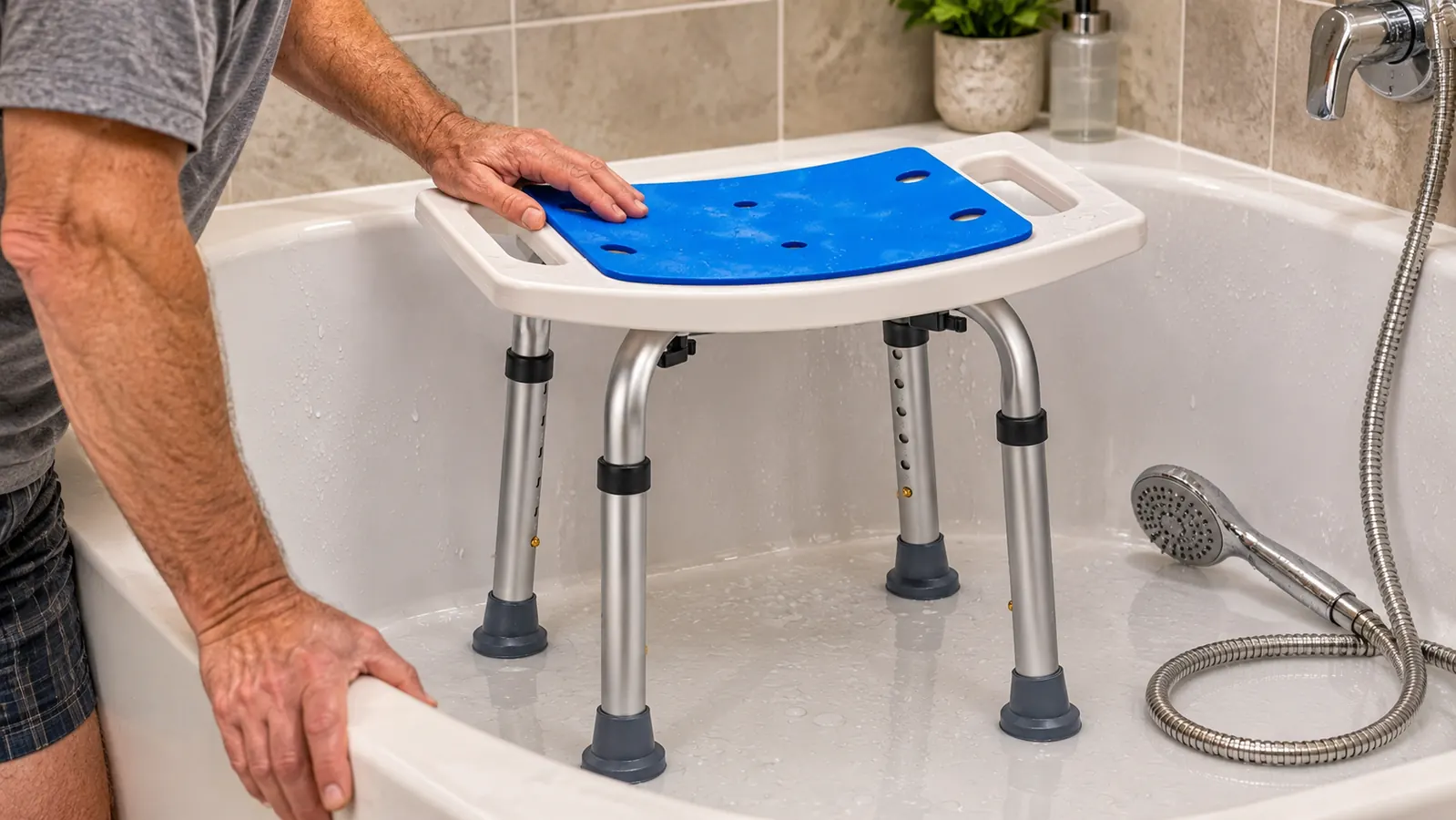
Badly. One hand on the wall, one hand on the shower curtain rod, which is not attached to anything meant to hold a grown man. I had been doing that for two years without once thinking of it as a fall waiting to happen. That is how the Dr. Kay's shower chair ended up in my bathroom, and why I have opinions about it now.
Before that I worked through the cheap fixes, the way most of us do. A plastic stool from the garage that slid on wet fiberglass. A folded towel on the tub floor, which is worse than nothing because it holds water and hides how slick the surface underneath really is. A suction grab bar that let go the third time I leaned on it. None of it cost much and none of it worked.
What I actually needed was a seat that sat flat inside the tub, carried my weight without flexing, and gave me somewhere to put both hands while I got up. That is a shorter list than the catalogs make it look. So I measured the inside of my tub, read the listing twice, and ordered.
Set at the right height, with my feet flat on the tub floor, I can push myself up without touching the wall. That is the whole test, and it took me two tries to get the height right.
A seat that sits flat in the tub instead of a stool that slides on it
Aluminum frame rated to 350 pounds, seat measuring 16.7 by 10.5 inches, adjustable to five heights between 13.4 and 18.5 inches, built-in side handles. Rated 4.7 stars across more than 13,000 reviews.
Amazon Check Today's Price on Amazon →The height adjustment is the part that matters most and the part most people get wrong. The seat sets at 13.4, 14.4, 15.4, 17.2, or 18.5 inches off the tub floor. My first guess was too tall, which left my feet barely touching and made the whole business feel unsteady. My physical therapist had me drop it to where my feet sat flat and my knees were roughly level, and that was the difference between a chair I used and a chair I avoided.
The Dr. Kay's frame is aluminum and the whole thing weighs about 2.1 kg, so a bit over four and a half pounds. I can pull it out of the tub with one hand to rinse the soap film off the floor, which sounds like a small thing until you have left a heavier chair sitting in place for a month because lifting it hurt. The seat surface is 16.7 inches by 10.5 inches, wide enough that I am not aiming.
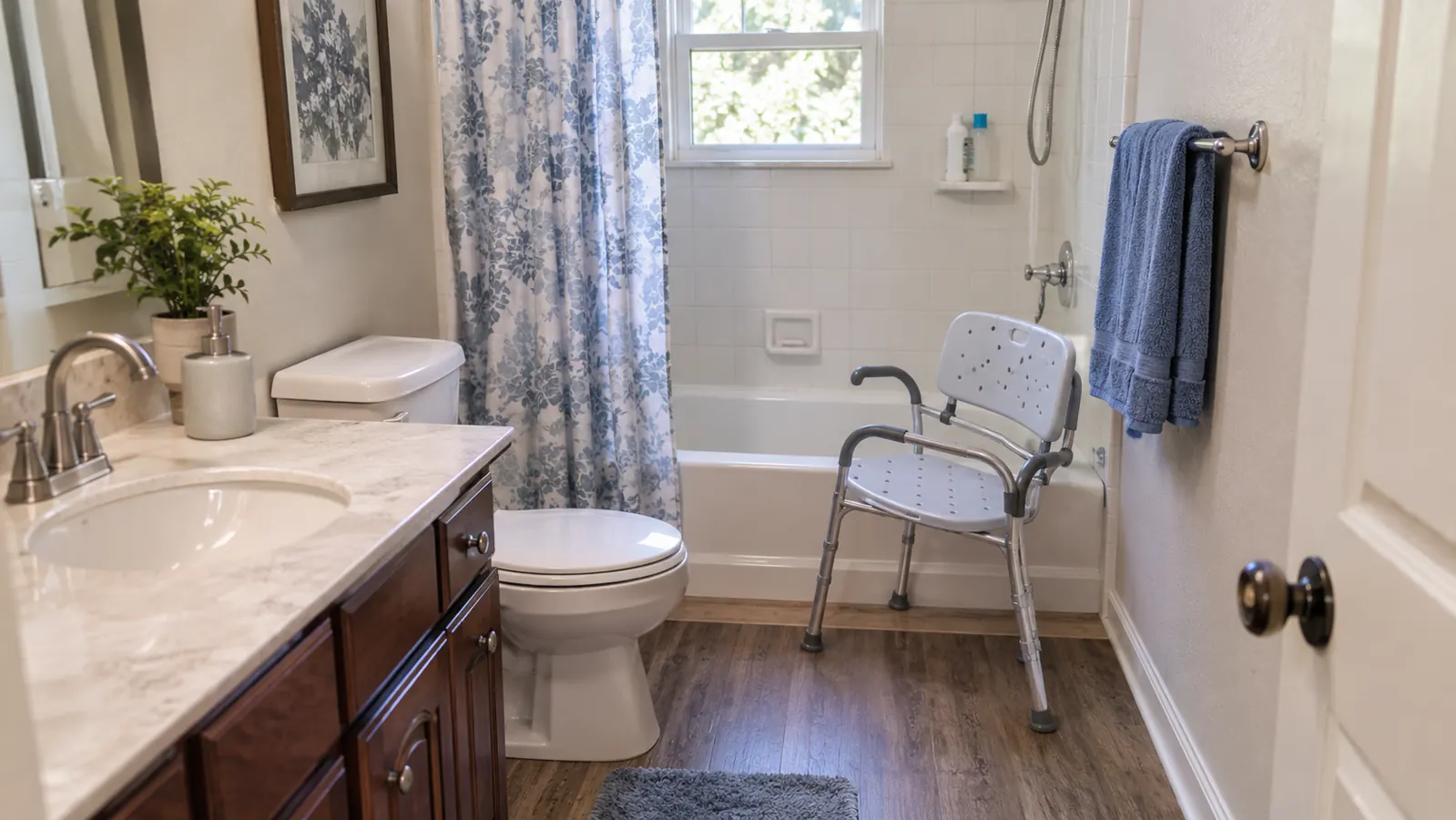
The built-in side handles are the feature I did not expect to use and now use every single time. My hands go to them before my knees do anything. They are also handy for steadying a handheld showerhead, which is what the listing says they are for and what I actually do with them.
What I do not love about the Dr. Kay's chair. It is a chair, not a lift, so it does nothing about the step over the tub lip, and that step is its own problem. The height is fixed at whichever of the five settings you pick, so if two people of different sizes share the bathroom, somebody is compromising. I have to pull it out to clean underneath it, and the rubber tips on the legs need a look every few weeks, the same as any tub chair. And it does not replace a grab bar on the wall. I still want one, and I still have one.
The first week I used it every shower and hated needing it. The second week I stopped thinking about it. By the third week I had stopped planning my mornings around how my knees felt, which is the only result I actually care about. I am not going to tell you it fixed anything. My knees are still arthritic, the stairs still bother me, and my doctor and my therapist are the ones who manage that. What changed is that a wet, slick surface stopped being the most dangerous place in my house.
What I'd Tell You If We Were Sitting at My Kitchen Table
I would say go ahead and buy it, but measure first and set the height second. Most people who end up hating a shower chair hate it because it sits too tall or the legs do not land flat, and both of those are things you find out in the first two minutes if you bother to check. Bring a tape measure into the bathroom. Do not guess from memory, because I did that once and got it wrong.
I would also say do not skip the wall. A chair gets you off your feet. It does not give you something to hold when you stand up. Joan made me put a proper grab bar in, anchored into the studs, and she was right, the way she usually is. The chair and the bar do two different jobs and you want both. And if your doctor or physical therapist wants the height set differently, or wants you using a different piece of equipment altogether, listen to them over a retired machinist on the internet.
Five heights, two side handles, and a seat that finally stays put
If you are still standing on a wet tub floor with one hand on the curtain rod, this is the fix I landed on. Rated to 350 pounds and light enough to lift out with one hand.
Amazon Check Today's Price on Amazon →