
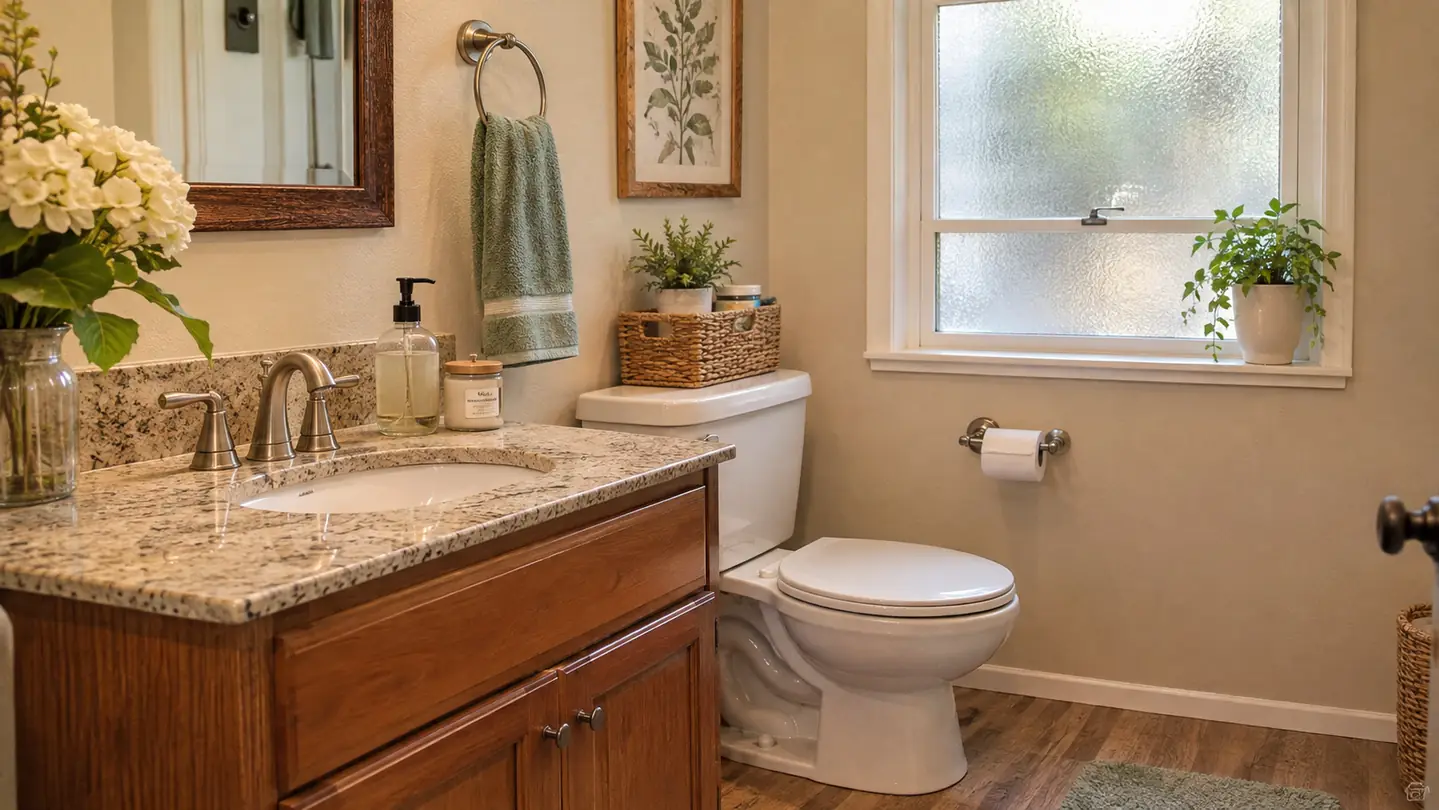
I put the bathroom off for two years. Not the tile or the vanity, none of that. I mean the part where you stand up off the toilet and your knees have to decide whether they are going to help you. Mine quit helping somewhere around sixty-nine. Arthritis in both knees, a lower back that locks up if I sit more than about ten minutes, and a right knee that buckles without any warning at all. Usually on stairs. Usually right after I have been sitting a while.
I had one fall. In the garage, not the bathroom, stepping over that little lip where the concrete slab meets the floor. Bruised my hip and my pride, broke nothing. My daughter drove down that weekend, stood in the hall bathroom with her hands on her hips, and asked me what happens when it is that toilet instead of the garage floor. I did not have a good answer for her.
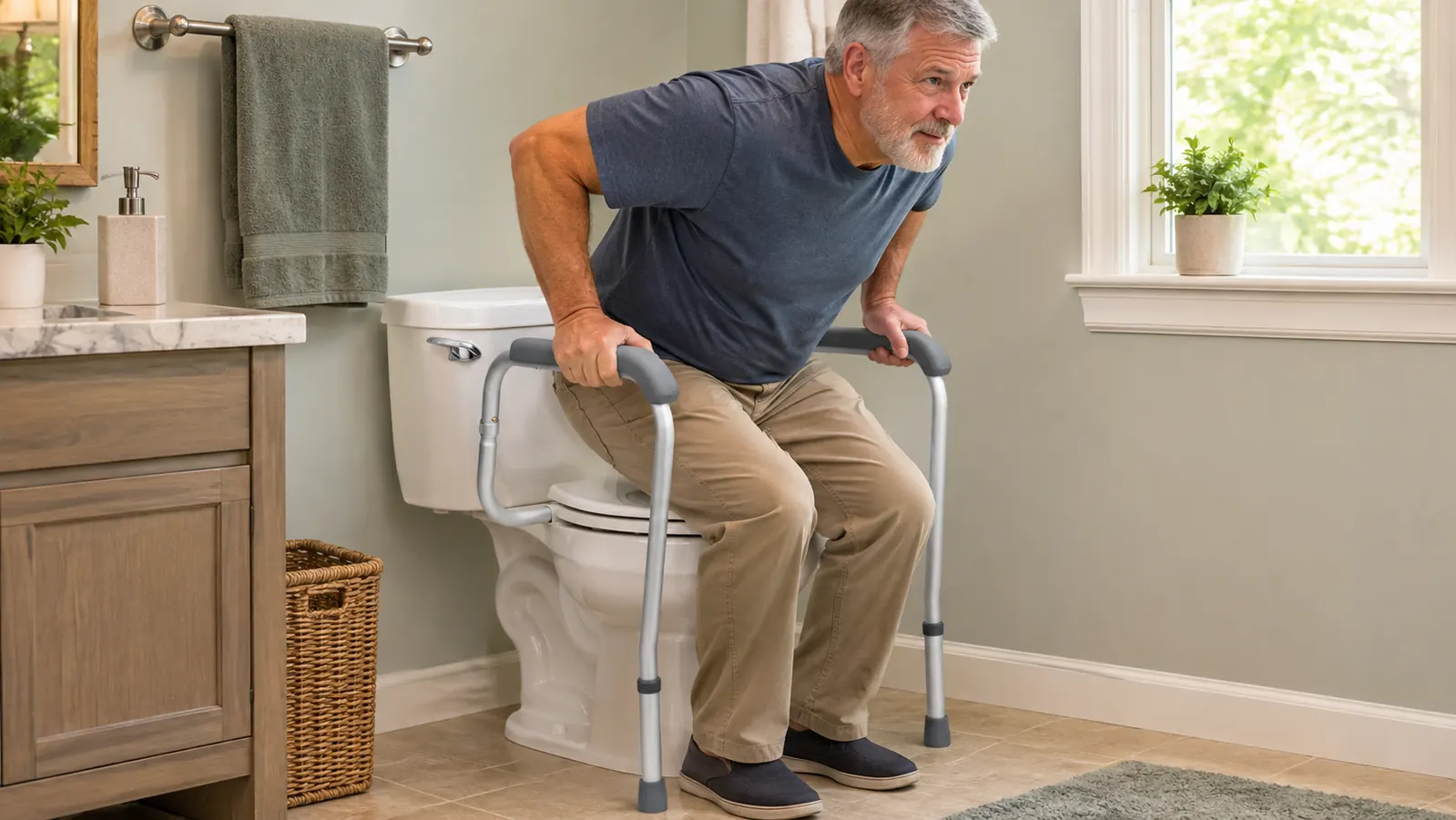
So I bought the Medline Toilet Handle Safety Rail. Medline builds a good deal of the equipment you see in clinics and hospital rooms, and this is the same idea brought down to house scale: two arms on an aluminum frame, one on each side of the toilet, something to push against that is not your own legs. It was not the first option I considered. I want to tell you why I passed over the other two, because I think most people do what I did.
First I looked at grab bars. A grab bar is fine if you have the wall for it. In my hall bathroom there is exactly one wall within arm's reach of the toilet and it is behind you, not beside you, and putting a bar into that tile means finding a stud and cutting a hole. Second I looked at the raised seat, the kind that sits over the bowl. That buys you height. It does not give you one thing to hold on to. Height was not my problem. Getting up was my problem.
The rail arrived in a flat box and it was not an afternoon project. It is aluminum and 4.4 pounds. It folds, and folded it measures 29 by 19.8 by 3 inches, which stands behind a door or slides into the trunk of the sedan. Nothing got screwed into the tile. The arm height adjusts, the width adjusts, and the handles rotate back out of the way so you have a wider range to find a position your shoulders agree with.
The first week I was clumsy with it. You have to learn that the rail is there, and I kept forgetting and pushing off my knees out of habit. By the second week I was using both arms, one on the rail and one on the vanity, and the whole thing turned into a slow, controlled push instead of a lunge and a hope. That is the honest description of what this thing does. It gives your arms a job, so your knees do not have to do all of it.
The rail did not fix my knees. It turned a two-second gamble into a two-second push, and that was the whole point.
The thing I should have bought two years earlier
It folds flat, adjusts in width and arm height, and nothing gets bolted into the tile. If your knees are the ones deciding when you stand up, this is the first change I would make in that bathroom.
Amazon Check Today's Price on Amazon →Now the part I do not like. It takes up room. The frame is 19.8 inches wide and it sits where your feet want to be, so in a hall bathroom this size you learn to step into it instead of walking up to it. If your bathroom is tighter than mine, measure before you order, because a rail you have to turn sideways to use is worse than no rail. It also does nothing for the tub. I still shower with one hand on the wall, and that is a separate problem with a separate answer.

Second thing. Read the weight rating twice. The listing title says 250 pounds and the spec panel says a 300 pound maximum recommendation, and I am not going to tell you which one your doctor would want you to go by. Ask Medline directly and get the answer from the people who build it, not from a review. Mine included.
What it did for my mornings is hard to describe without sounding like a commercial. I get up twice a night, most nights. Before the rail, that was two negotiations with my own body and a fair amount of holding my breath. Now it is a push and a step and back to bed. My wife Joan noticed before I did. She said I had stopped making that noise, and I did not know I was making a noise.
The other thing Joan likes is that it comes off. When the grandchildren come through, or when we have people over and I want the bathroom to look like a bathroom and not a hospital room, it folds and goes behind the door in about the time it takes to fold a card table.
What I'd Tell You If We Were Sitting at My Kitchen Table
Measure your toilet before you order anything. Not the bathroom, the toilet. How high the seat sits off the floor and how much clear floor you have on each side. The rail's height range is 27.5 to 32 inches and the spec sheet gives a seat depth of 16.75 inches and a seat back interior height of 31.5 inches, so write your own numbers down and compare them side by side instead of trusting the words fits most.
Then take those numbers to your physical therapist. Mine is the one who told me I was standing up wrong, leaning too far forward before I pushed, and that was worth more than the rail. He also checked the arm height once I had it set, which took five minutes and saved me a month of guessing. I am not a doctor and I am not going to pretend to be one. Get fitted by somebody who does it for a living.
Last thing. If your knees are already deciding your day, do not wait two years like I did. There is no particular courage in the push and the hope. I told myself I was managing, and I was, right up until the garage floor reminded me that managing and safe are two different words. The Medline rail is not a fix for arthritis. It is a thing to hold on to, and some mornings that is the whole difference.
Start with the bathroom, not the whole house
Aluminum frame, folds flat, adjusts in width and arm height, rated 250 pounds in the listing title. Measure your toilet first, then set the arms where your therapist tells you to.
Amazon See the Medline Toilet Safety Rail on Amazon →